88% of U.S. public schools now put a screen in front of every child. Yet the research is clear — screens harm our children and their ability to learn. Going back to traditional schoolbooks feels like a setback.
nopad takes the latest AI and the neuroscience of how children actually learn, and puts it in your hands. You direct. The AI builds personalized reading & comprehension worksheets. Your child reads and solves on paper.
Children are spending their formative years on screens — at school, after school, and inside almost every "educational" product built for them. The defenders say this is the future. The research says this is the cost. Attention is collapsing. Reading is collapsing. Patience for anything difficult is collapsing.
We think this is fixable. Not by going backwards. By inverting the relationship: the AI works for the adult, the child works with their hands. The smartest education companion ever built — pointed at the parent, not the child.
The defenders of screen-first education are running an experiment on the only childhood your child gets. The data is already in.
You are not supposed to be the curriculum director, the lesson planner, and the assessor all at once. nopad takes those roles. You stay the parent — the one who knows your child, encourages, corrects, and listens. With this purpose-built AI, you have a solid partner to do the work nobody can do alone.
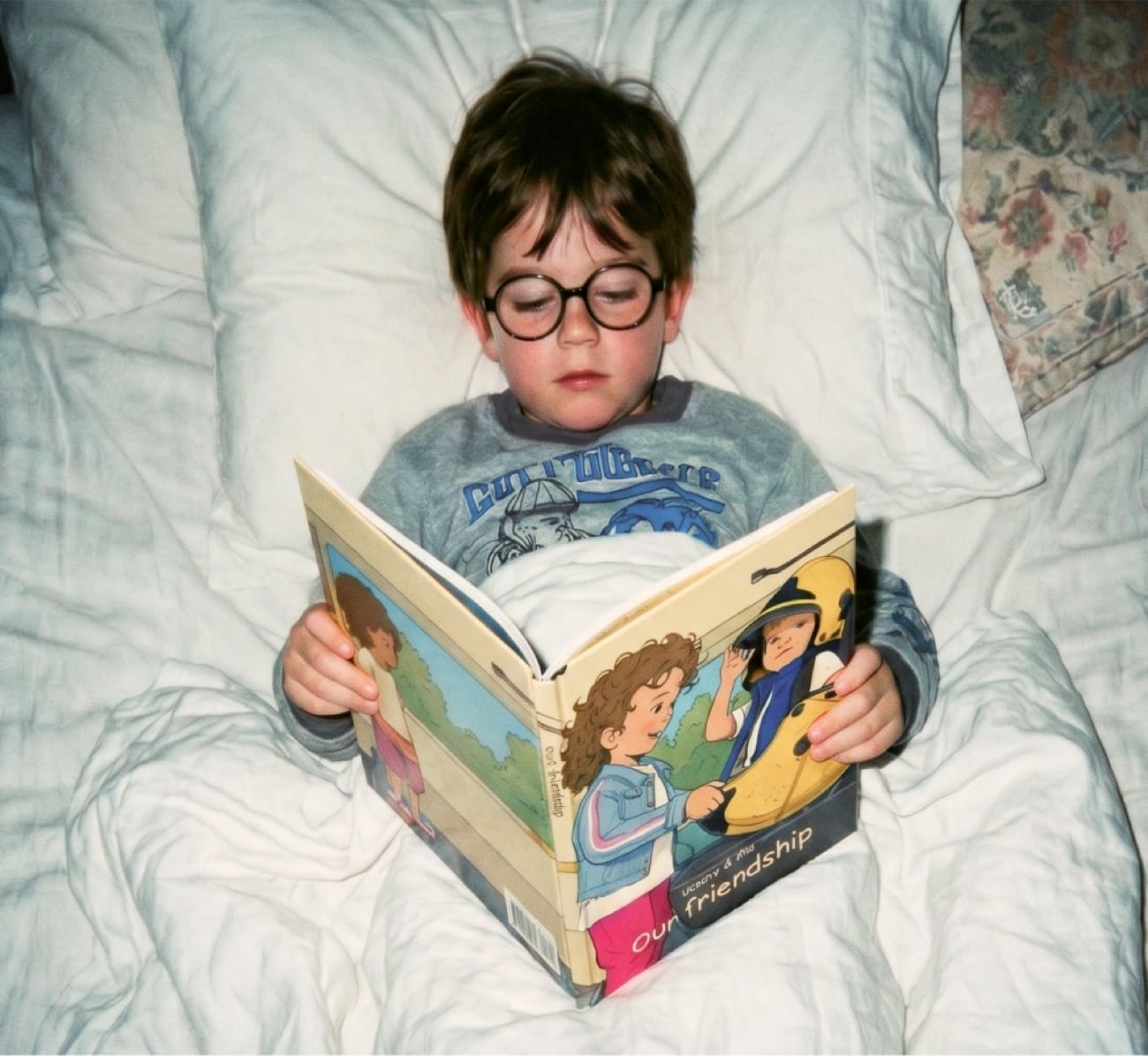
It adapts to your real kid — Liam, who loves go-karts, struggles with fractions, reads above grade on action plots — not the average classroom requirement.
Puts together a two-step worksheet: (1) texts based off your kid's interests to engage them in the reading process; (2) comprehension, fact-recall, reasoning, and synthesis exercises to strengthen their memory and language skills.
Feeds on your feedback about what went well and what felt hard, then adapts the next session. This is not a hands-off experience — it's an engaging companion to assist you in your hardest job: helping your kid develop at their potential.
Mass schooling solved a real problem: how to teach everyone, affordably, at once. It was never ideal for any individual child. Personalized learning has always been the dream. AI just made it real.
"Curiosity triggers a specific neurochemical state that dramatically improves memory encoding. Content a child is actually interested in isn't a nice-to-have. It's the delivery mechanism for everything else."
A child advances when they actually understand — not when their birth year says they should. Gaps get filled before they compound into walls.
The same math problem can be wrapped in a context the child loves — a best friend, a favorite animal, a passion — or in something generic they tune out. The equation doesn't change. The brain state the child brings to it does.
One-on-one mastery tutoring outperforms classroom instruction by two standard deviations. Everyone knew this in 1984. Nobody could afford to deliver it — until now.
The science behind learning-by-hand, mastery-based teaching, and curiosity-driven content has been settled for decades. What changed is who can finally deliver it.
"One-on-one mastery-based tutoring produces two standard deviations of improvement over classroom instruction. Everyone knew this for 40 years. Nobody could afford to deliver it at scale."
"Children who hand-write their work activate motor, visual, and cognitive systems simultaneously. Typing bypasses the loop. Paper isn't nostalgia — it's neuroscience."
A child who misses a 4th-grade fraction concept hits a wall in 6th grade — and traditional school rarely doubles back. Real learning requires detecting where a child actually is, not where their birth year says they should be, and filling holes before advancing.
A generic word problem and one framed around what the child actually cares about use the same math — but produce fundamentally different engagement and retention. Curiosity isn't decoration. It's the delivery system.
Writing out answers forces retrieval, not recognition. Multiple studies show handwritten learning produces stronger long-term retention than typing. Paper isn't primitive. It's a structural advantage.
Deci and Ryan's self-determination research shows that extrinsic rewards — streaks, points, badges — gradually displace curiosity-driven learning. Children on gamified platforms learn to optimize for the reward, not the knowledge.
Both parties now agree. At the Senate Commerce Committee's January 2026 hearing on screens and learning, neuroscientists and lawmakers converged on one finding: kids spend more than eight hours a day in front of screens — and the academic, attention, and mental-health costs are no longer in dispute.
Daily packs are planned against open-source curricula already used by school districts nationwide — aligned to Florida B.E.S.T. and Common Core State Standards. The child stays on grade. The curriculum flexes to them.
The panel's three asks — no chatbots for minors, no engagement algorithms for children, paper back in children's hands — describe nopad's architecture. There is nothing to retrofit.
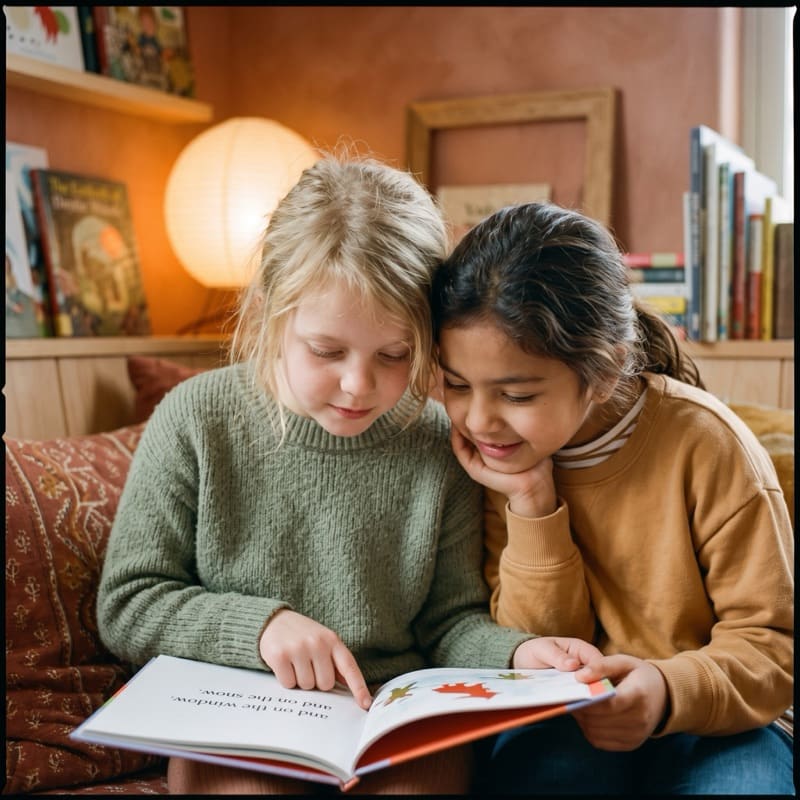
Every nopad day gives a child 60–90 minutes of sustained, off-screen, pencil-and-paper learning. The single educational input this generation gets the least of — measured in real minutes, not minutes-of-app-use.
The same expert witnesses called this generation the first to underperform on every measure of cognitive development. nopad is built — explicitly — to interrupt that trajectory in the homes of the families who use it.
Florida's scholarship programs make it possible for any family to choose how their child learns — outside the classroom, on their own terms, with real curriculum support. nopad is built for this landscape — parent-directed, mastery-based, designed around the scholarship vendor model.
We're working directly with a small group of parents before opening broadly. Your feedback shapes the product. If you believe children should learn by hand and parents should lead with AI, you're who we're building for.